
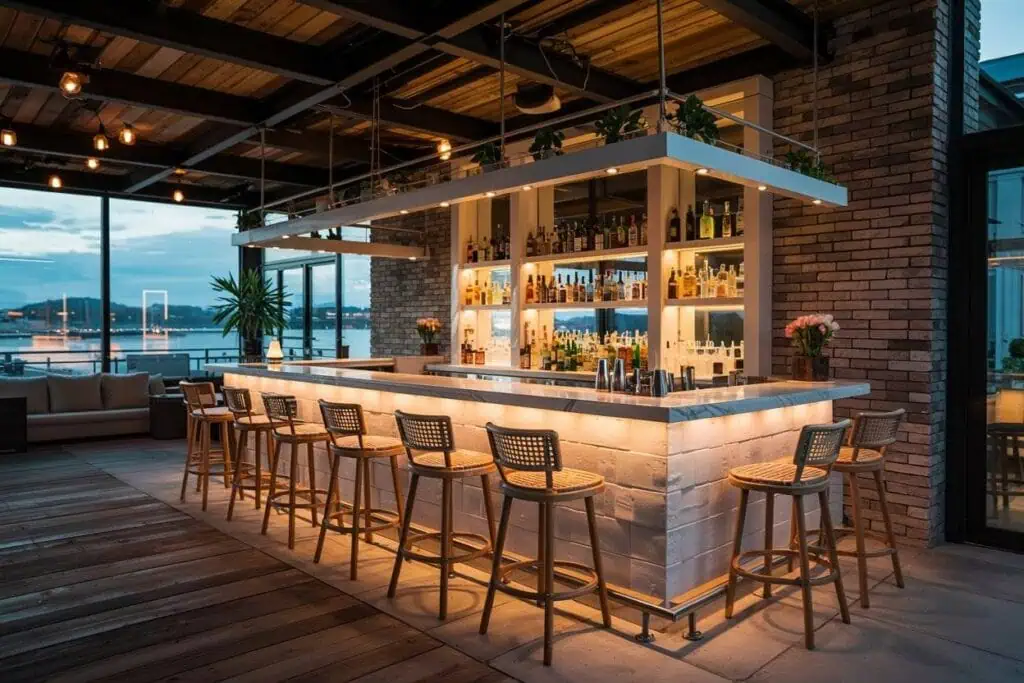
Lighting in restaurants is no longer just about seeing clearly; it is about creating an experience. More designers are embracing it as a creative tool, shaping spaces that feel immersive and memorable. Backlit bar stools are a perfect example, blending the artistry of statement lighting with the guest-level charm of subtle mood enhancement. They draw people in and transform the bar area into a focal point.
Visual appeal is a powerful driver of guest engagement. Around 70% of diners share their restaurant experiences on social media, often because of the atmosphere. A warm glow under restaurant bar stools makes the space more inviting and visually striking. Lighting also impacts operations and costs. It accounts for roughly 13% of a restaurant’s total energy use, so efficiency matters. LED systems can cut consumption by up to 90% compared to traditional bulbs and last far longer. Even a small increase in guest dwell time can translate into higher spending, making thoughtful lighting design a worthwhile investment. When these under-stool glows work in harmony with the rest of the space, they become part of a complete visual story.
Types of Statement Lighting Trends and Their Influence
Statement lighting is about personality. It is bold, memorable, and often oversized or sculptural. Guests recall the glow and shapes as much as the menu itself. These fixtures define spaces, whether through striking pendants, layered illumination, or sculptural forms that make the entire room feel more curated.
Hospitality spaces increasingly use lighting to tell stories, with programmable colors, kinetic effects, and modular LED designs adding variety. This growing emphasis has fueled a restaurant lighting market worth over USD 4 billion, expected to keep climbing. Backlit furniture is now part of this movement, with bar stools becoming integrated into the overall lighting palette. Wall-to-wall LED strips, recessed floor glows, and targeted accent lighting work together to guide guest movement and define zones. Seasonal color changes or programmed light scenes keep the environment dynamic and memorable.
Designing Backlighting for Bar Stools to Elevate Mood
The right glow beneath a bar stool can completely change its presence in a room. Warm lighting, between 2,700 and 3,000K, creates a soft and intimate feel, while cooler tones of 3,500 to 4,000K add energy to modern spaces. Lighting can also shift depending on the time of day, from a cozy early evening tone to a more vibrant late-night setting.
Dimmable systems make it easy to fine-tune the ambiance. Lighting should be integrated into the stool design so it feels natural, using diffusers, slim LED strips, or acrylic panels that hide the source. These thoughtful touches not only enhance the atmosphere but can also encourage guests to linger at the bar. Pairing under-stool lighting with subtle under-counter illumination creates clearly defined bar zones. Modular designs allow quick updates, and motion sensors add a personal touch by responding when guests approach. In the right setup, lighting becomes interactive and quietly influential.
Materials and Technology Choices for Impactful Lighting
Choosing technology wisely ensures that lighting remains beautiful and functional. High-efficiency LED modules, reaching up to 200 lumens per watt, provide excellent brightness with low energy use. The choice between RGB, RGBW, and tunable white LEDs depends on whether bold color effects or subtle tone shifts are desired.
Diffusers and reflective materials such as polished metal help soften and spread the light evenly. Hospitality settings require low-heat components that can last 50,000 hours or more. Sustainable materials, recyclable housings, and low-toxicity components appeal to eco-conscious brands, even in the home furniture and renovation industry, not just hospitality. Smart systems with pre-set lighting scenes and real-time monitoring make it easier to adapt the mood instantly. In spaces where wiring is tricky, wireless power coupling can keep things neat, while fiber-optic panels create a decorative glow without a power source at each seat. Finishing touches, like brushed brass panels, can enhance the light through reflection.
Installation and Integration Strategies for a Cohesive Look
Good installation makes lighting feel like a natural part of the space. Concealed cabling routed down stool legs or along footrests keeps the look clean. Wiring should be planned with the building’s layout in mind, ensuring power is accessible without disrupting the design.
Stool lighting works best when it complements the bar’s other elements. Coordinating with wall textures, flooring, and countertops helps create visual balance. Zoning lighting according to bar sections can make the design feel intentional while simplifying control. Easy maintenance features, like removable covers and labeled connectors, save time. Modular kits that can be inserted before upholstery work also speed up future changes. Testing lighting at different times of day ensures it performs well in any setting.
Enhancing the Guest Experience Through Creative Lighting
Lighting can do more than set a mood; it can add a sense of theater. Dynamic light sequences can transform the bar for special events or themed nights, while specific color accents can highlight seasonal drinks or featured menu items.
Guiding movement through lighting is another subtle yet effective technique. Guests naturally follow lighted pathways, making it easier to draw them toward service areas or focal points. Interactive features such as motion-triggered lighting add novelty and warmth to the experience. Some venues go further, linking lighting changes to moments in service, such as drink delivery. Adjusting brightness levels during different parts of the evening helps maintain balance, from quiet lulls to busy peak hours. Combining soft stool lighting with background sound cues can create a sensory layer that feels unique.
Capturing the Social Media Factor
Visually striking lighting is a natural magnet for phones and cameras. Restaurants with creative lighting designs often benefit from free exposure as guests post photos online. The best setups look just as good on camera as they do in person, so testing under various conditions is important.
Themed lighting nights or influencer events can bring attention to the space. Seasonal updates, from holiday colors to limited-time effects, keep photos feeling fresh. Staff can even guide guests toward the most photogenic seating areas without interrupting their experience. Design choices like shadow framing or deliberate negative space can make images stand out. Sharing behind-the-scenes glimpses of lighting setups on social media helps position the restaurant as a creative leader in design.
Final Glow, Crafting Atmosphere That Resonates
Backlit bar stools bring statement lighting to a personal level, giving guests a close, intimate experience of design. When done with intention, they enhance mood, strengthen branding, and support smooth operations.
Using LED technology alongside smart controls keeps running costs low while creating dramatic effects. Every detail, from the quality of the glow to how it connects with other design elements, contributes to a lasting impression. Tracking return on investment through guest behavior, social media activity, and bar revenue can show the value of the upgrade. Seasonal programming keeps the lighting fresh, while thoughtful adjustments maintain its impact over time.
Lighting is more than a visual aid, it is part of the restaurant’s identity. A well-lit stool is more than a place to sit, it becomes part of the guest experience. With the right approach, lighting can turn an ordinary bar area into a captivating part of the story, making every seat a reason to stay longer and return often.
